 of pardon to legalize their stay in Saudi Arabia for more than two million inhabitants of different countries came to an end, the atmosphere in all those bustling cities like Mecca, Median and Riyadh became tense. There are thousands of Ethiopians who have entered Saudi illegally and are earning their living in different ways. But most Ethiopians can’t be able to legalize their papers in those months of pardon given by the Saudi government for different reasons. The difficult bureaucracy in the Saudi government offices and the fact that the Consulate couldn’t provide the necessary papers of the citizens to the Saudi officials in time has hampered the process. Therefore, when the pardon month came to an end, there was a gloomy speculation that a very severe catastrophe will descend on all the Ethiopians; legal and illegal. Even those Ethiopians who have legal papers to stay and work in Saudi have expected hard times as the pardon months’ end closes in. As the last day of the pardon months ended, many thousands of Ethiopians stayed at home and began to expect the worst. Though the Saudi government officials said that there will not be any home to home search, for Ethiopians living in Riyadh Monday night was a different affair – all through the night there was abusive home to home search where as the initial count declares two Ethiopians get killed and a lot more having severe physical injuries. A Menfuha neighborhood in Riyadh where many Ethiopians who entered Saudi through Yemen illegally was the first target of the search and the abuses. In the coming days the number of Ethiopians died of this incident rises to five. Saudi government forces even use motor bikes and helicopters for their ‘man hunt’ outside the cities. As the Ethiopian community school closed, the images of mutilated bodies and Ethiopians who have died of gunshot began to circulate among the Ethiopian community worldwide. Girum DireTube from Nebeyu Sirak in Saudi
From the Previous Post
 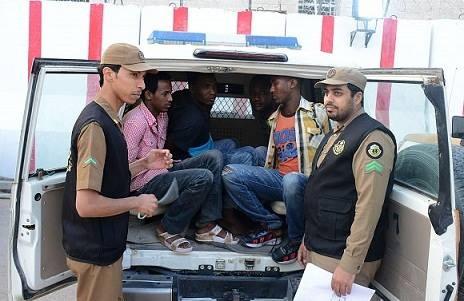   
SOURCE, DIRE TUBE
|
Friday, November 8, 2013
Witness of the Calamity on Ethiopians in Saudi

Breaking news የግንቦት 7 መሪዎችን ለመግደል የተጠነሰሰው ሴራ ከሸፈ
በኢትዮጵያ የብሄራዊ መረጃና ደህንነት ዋና ሃለፊ በአቶ ጌታቸው አሰፋ እና በጠቅላይ ሚኒስትሩ የብራዊ ደህንነት አማካሪ በአቶ ጸጋየ በርሄ ቁጥጥር የተመራና በአቶ አንዳርጋቸው ጽጌና በግንቦት7 ህዝባዊ ሀይል መሪዎች ላይ የተቀነባበረው የግድያ ሙከራ ከሸፈ።
ከግንቦት7 ህዝባዊ ሀይል ለኢሳት የደረሰው መረጃ እንዳመለከተው ለግድያ የተላከው ሙሉቀን መስፍን የተባለው ግለሰብ በትናንትናው እለት በቁጥጥር ስር የዋለ ሲሆን፣ በእየደረጃው ከሚገኙ የደህንነት ሀላፊዎች ጋር በስልክ ሲያደርግ የነበረው የስልክ ለውውጥ በህዝባዊ ሀይሉ የመረጃ ክፍል ሲቀዳ ቆይቷል።
ወያኔ-ኦ-ሚሊኒየም በሚል የተመራው የግድያ ዘመቻ -በነገው እለት ጥቅምት 30/2006 ዓም ሊካሄድ ታቅዶ እንደነበር የድምጽ መረጃው ያመለክታል። ( )
የግንቦት 7 ህዝባዊ ሀይል ሰራዊት የምረቃ በአል በነገው እለት የሚካሄድ መሆኑን መነሻ በማድረግ በእለቱ በግንቦት7 ህዝባዊ ሀይል መሪዎችንና የኤርትራ ባለስልጣናትን ለመግደል የታቀደው ዘመቻ ከመነሻው ክትትል ሲደረግበት ቆይቶ፣ በፍጻሜው ዋዜማ ላይ ሲድርስ ሙሉቀን መስፍን የተባለውን ለግድያ የተላከውን ግለሰብ ህዝባዊ ሀይሉ በቁጥጥር ስር በማድረግ ወያኔ-ኦ-ሚሊኒየም የተባለው ኦፕሬሽን ከሽፏል።
የድምጽ መረጃውን ኢሳት ዌብሳይት ላይ ተከታተሉ

SMNE Calls for Strong Measures from the International Community, Donors and International Investors in Confronting Official Corruption in Ethiopia
The Government of Ethiopia is broadly soliciting for development
aid, foreign-based business partnerships and financial investors;
yet, the unpopular ruling party has been accused of abuse of state
power, misuse of donor funds, widespread party-run business monopolies,
illicit financial practices and endemic corruption. It is time to demand
accountability from all involved and concerned.
The
Solidarity Movement for a New Ethiopia (SMNE) is a non-political and
non-violent social justice movement of diverse people that advocates for
freedom, justice, good governance and upholding the civil, human and
economic rights of the people of Ethiopia, without regard to ethnicity,
religion, political affiliation or other differences. The SMNE believes a
more open, transparent and competitive market economy, supported by
viable institutions and reasonable protections, which provides equal
opportunity, will result in greater prosperity to the people rather than
keeping it in the hands of a few political elites.
We
strongly contend that Ethiopia will not emerge as a dependable global
economic partner until the corrupt and illegal practices of the current
one-party regime’s monopoly end and existing blocks of entry to
non-party members are lifted. We also believe the global business
community as well as donors to Ethiopia can contribute by coming
alongside Ethiopians in the push for meaningful reforms. Such reforms
would include greater transparency and an opening up of economic space
to the private sector, without which growth and development—beyond the
benefit of the ruling party’s affiliates—will never be realized.
In light of this, the SMNE urges the international community, donor
nations, charitable organizations, and the international financial and
business community to make demands on the Government of Ethiopia (GOE)
for compliance with national and international laws. This must include
holding companies affiliated or owned by members of the ruling party,
including those businesses associated with their business conglomerate,
Endowment Fund for the Rehabilitation of Tigray, (EFFORT), accountable.
Additionally, measures should also strongly support restoring autonomy
to independent institutions, the judiciary, and the Media and upholding
the human and economic rights of the people.
Until these measures are taken, the SMNE urges these stakeholders in
the international community to withhold investments, development
financing and other forms of partnering with the regime and its cronies.
The ruling TPLF/EPRDF party has misused its state power and
expenditures of foreign aid to corner the market through its companies
and affiliates in all sectors of the economy. Illegal expropriation of
land and public resources, corruption, illicit capital leakage and
dubious allegiances riddle these secretive deals, putting prospective
partners at high risk for future liability or other uncertain
consequences.
The Oakland Institute in its July 17, 2013 press release:
“Development Aid to Ethiopia: Overlooking Violence, Marginalization, and
Political Repression,” warned the international community on the
dangers of unwitting complicity in creating this illegal monopoly of
business and civil society that provides the Ethiopian regime
development aid amounting to “an average [of] $3.5 billion a year,
equivalent to 50 to 60% of Ethiopia’s national budget.”
Likewise, the international community and investors have largely
ignored or, knowingly or unknowingly, become complicit with the
pervasive corrupt practices of many of the 100’s of companies owned and
operated by the Tigrayan Peoples’ Liberation Front (TPLF) that dominates
the ruling coalition government of the Ethiopian Peoples’ Democratic
Republic Front (EPDRF). “Companies under the Endowment Fund for the
Rehabilitation of Tigray, known as EFFORT, alone account for roughly
half of the country’s modern economy”, according to an IPS report titled
“Examining the Depths of Ethiopia’s Corruption.” The wife of the late
Prime Minister, Meles Zenawi, headed up the organization until only
recently.
Bloomberg News, in its October 27, 2009 edition, reported “Guna
Trading House Plc, owned by Ethiopia’s ruling party, said it plans to
become one of the nation’s biggest coffee exporters, raising concern
among industry observers that private industry may get crowded out.
The report quotes the late prime minister regarding the company’s plans to expand in the industry. ‘We are intending to export to Europe, the U.S. and China,’ he said. Guna is among at least four other companies owned by the state or Prime Minister Meles Zenawi’s ruling party.”
Coffee Plantation Development Enterprise, Dinsho Trading P.L.C and Ambasel Trading House P.L.C. are among coffee exporters under the ownership of the ruling party that has been able to obtain favored treatment from public agencies and enterprises due to the regime’s control of these government agencies that should otherwise be holding them accountable. Companies that fall out of line can suddenly fall under the scrutiny of these agencies. As a result, those associated with the ruling party are able to dominate key industries, including the export of commodities. See some of the more visible companies and less visible, like Wogagen Bank, Sheba Tannery P.L.C., Ambasel Trading House P.L.C., and many more companies owned by the ruling party.
Another company within EFFORT’s group is Almeda Textile Factory. According to the company, it is the biggest textile factory in Ethiopia. It is one of the major exporters of textile products to the US market. The company has had help in achieving this position through assistance from US government agencies, made available through the Africa Growth and Opportunity Act (AGOA). Additionally, according to the United States Agency for International Development‘s News, they report giving technical assistance to Almeda Textile Factory through the USAID East Africa Competitiveness and Trade Expansion Program (COMPETE). They also sponsored the company in an exhibit at the MAGIC Apparel Trade Show in August 2009.
Essentially, the US government agency admittedly supported this
Ethiopian ruling party-owned company in its exports into the US market,
also allowing Almeda AGOA’s duty free import privilege, something that
was intended for independent businesses. This is in direct violation of
US anti-corruption laws.
Another ruling party-owned company, Addis Pharmaceutical Factory,
which dominates the local market, claims to be the largest
pharmaceutical manufacturing plant in Ethiopia. According to the
company, it manufactures “analgesics, anti-acids, antibiotics,
anti-malarias, anti-asthmatics, amoebicides, anthelmenics, cough syrups
and vitamin preparations.” Addis Pharmaceutical allegedly benefits from
the expenditure of health funding from development agencies.
The international community, including development agencies,
charitable organizations and investors, often have ignored the
implication of associating with the ruling party’s owned companies. This
is contrary to the public interest and is in violation of international
laws and regulations against corruption.
For example, in a press release on the appointment of the Bill and
Melinda Gates Foundation’s first official representative in Ethiopia,
the co-chair, Melinda Gates, said, “We invest more than half of our
resources in Africa, and we want to build closer and more effective
relationships with valued partners on the ground.”
According to the Foundation, “Ethiopia is an important focus country
for the foundation, which currently provides more than USD $265 million
in funding to partner organizations that are operating health and
development programs across the nation.”
In Ethiopia, ruling party controlled organizations and businesses are
nearly the only partners possible, creating an oligarchy similar to
what has happened in Russia and other countries in Africa where
totalitarian governments and their cronies pillage the economy and
resources to their own advantage and without regard to the people.
What appears to be negligence and a lack of doing due diligence on
the part of the foreign aid community and investors, including the UN
Millennium Development Goal (MDG), the Bill and Melinda Gates
Foundation, USAID, among many other agencies and investors,
unfortunately contributes to making it possible for the ruling party and
its affiliated companies to involve themselves in all kinds of shadow
businesses while eroding the prospects for viable independent businesses
to emerge and survive.
As a result, in the last decade the number of parallel shadow
business enterprises associated with the ruling party and affiliates
have mushroomed in every sector of the economy while at the same time
the international community has poured in billions of dollars in
development aid and investment without appearing to question the ruling
party’s extensive involvement in business and trade.
Global Advice Network on its Business Anti-Corruption portal
concludes in the profile on Ethiopia: “The [Ethiopian] government
strategy is clearly top-down, dominating anti-corruption institutions,
the anti-corruption debate, and the formulation of anti-corruption
policy. Despite the introduction of anti-corruption initiatives in
previous years, including the Federal Ethics and Anti-corruption
Commission (FEACC) in 2001, corruption remains widespread at many levels
of government administration in the country.”
In the findings of the Bertelsmann Foundation 2012 Report , they
assert: “Ethiopian society’s deeply ingrained clientelism does not
foster a culture of accountability and transparency, has fostered
cover-ups and non-enforcement of laws”. For example, they report:
“Competition laws aimed at preventing monopolistic structures and
conduct exist within some sectors, but are enforced inconsistently. A
Competition Commission was established in 2006, and by the end of 2007
had reviewed some 23 cases. Although informally provided, the strongest
complaints are against the government’s preferences for party-affiliated
businesses; [however], only trade-related issues were investigated. The
transportation sector, for example, is to a large extent in the hands
of business people belonging to the para-party sector. There are a
number of companies close to the government and the ruling party, which
leads to a lack of transparency and [high levels of] corruption.”
A World Bank 2012 report on Ethiopia reinforces the same, saying that
“high-level corruption is widespread within the construction sector,
and that it is dominated by the ruling party affiliated companies.”
Reports alone cannot fully capture the enormity of the ruling party’s
affiliated companies’ extensive involvement in all sectors of the
economy due to the ruling party’s control of:
1. Public agencies such as: Ethiopian Rural Land Management Agency,
Privatization Agency, Investment Commission, Commercial Bank of
Ethiopia, Ethiopian Agriculture Transformation Agency, Ethiopian Grain
Trade Enterprise, Development Bank of Ethiopia, The Federal Ethics and
Corruption Commission, Information and Communication Technology Agency
and others;
2. Trade institutions such as: Chambers of Commerce and Sectoral Associations, The Ethiopian Commodity Exchange, Ethiopian Coffee Exporters Association and farmers and trade union and associations;
3. Licensing and regulating of charitable organizations, which includes: The Ethiopian Charities & Civil Societies Agency (ECCA) and legislations severely limiting the kinds of activities—civic engagement important to healthy societies—that organizations are allowed to carry out if they receive more than 10% of their financing through foreign sources, rather than through government funding under the Charities and Societies Proclamation; resulting in the ruling regime’s operation of hundreds of charitable organizations, including the Tigray Development Association (TDA);
4. Public Media infrastructures, including Ethiotelecom, (the only internet provider in the country) and Ethiopian Broadcasting Authority (the only shortwave Radio and Television broadcasters in the country), The Ministry of Communication and Information Technology http://www.mcit.gov.et/
2. Trade institutions such as: Chambers of Commerce and Sectoral Associations, The Ethiopian Commodity Exchange, Ethiopian Coffee Exporters Association and farmers and trade union and associations;
3. Licensing and regulating of charitable organizations, which includes: The Ethiopian Charities & Civil Societies Agency (ECCA) and legislations severely limiting the kinds of activities—civic engagement important to healthy societies—that organizations are allowed to carry out if they receive more than 10% of their financing through foreign sources, rather than through government funding under the Charities and Societies Proclamation; resulting in the ruling regime’s operation of hundreds of charitable organizations, including the Tigray Development Association (TDA);
4. Public Media infrastructures, including Ethiotelecom, (the only internet provider in the country) and Ethiopian Broadcasting Authority (the only shortwave Radio and Television broadcasters in the country), The Ministry of Communication and Information Technology http://www.mcit.gov.et/
The UNDP commissioned Global Financial Integrity Report: ‘Illicit
Financial Flows from the Least Developed Countries: 1990-2008’, revealed
that “approximately US$197 billion flowed out of the 48 poorest
developing countries and into mainly developed countries, on a net basis
over the period 1990-2008. Trade mispricing—when imports are overpriced
and exports underpriced on custom documents—accounts for 65 percent of
illicit financial flows.”
The report ranked Ethiopia among the top ten worst countries out of
the forty-eight. As a recipient of the largest development aid in
Sub-Sahara Africa, the international community has the obligation to
hold the GOE and the ruling party owned business conglomerate and
facilitating organization primarily responsible and accountable.
In light of these concerns, the SMNE calls on the international
community, donor countries and organizations and financial institutions,
investors or business partners, either prospective or established, to
not ignore the overwhelming evidences of endemic corruption but to take
strong measures to ameliorate the problem to the best of their ability
through exposure, denial of services, investigations, criminal
proceedings and remedial actions. Some of these actions should include:
• Demand that the ruling party disclose and dissolve all its business holdings built on public resources and foreign aid
• Demand that the ruling party affiliated charitable organizations’ including EFFORT Group, disclose their financial holdings to the public and cease operating charitable organizations
• Call for an independent investigation of the regime’s business and charitable activities
• Call for the immediate restoration of the independent Media, including allowing the international Media to operate freely in the country with full access to the public records
• Demand public disclosure of all records on foreign investment, including land contracts for the purpose of commercial farming as well as real-estate, mining and manufacturing
• Demand that the ruling party affiliated charitable organizations’ including EFFORT Group, disclose their financial holdings to the public and cease operating charitable organizations
• Call for an independent investigation of the regime’s business and charitable activities
• Call for the immediate restoration of the independent Media, including allowing the international Media to operate freely in the country with full access to the public records
• Demand public disclosure of all records on foreign investment, including land contracts for the purpose of commercial farming as well as real-estate, mining and manufacturing
The SMNE urges the international community, donor nations and
organizations, Ethiopian political parties, civic and religious
organizations and the Media, at home and abroad, to pressure the
international community to:
• Not provide a blank check and diplomatic cover for the Government, the ruling party and its affiliated companies
• Require meaningful conditions be met as part of receiving development aid and diplomatic support
• Closely monitor the misuse of military and security assistance they or others have provided that has helped the ruling party gain control of the ways and means of the economy
• Open an investigation on crimes of corruption and money laundering on the part of the ruling party’s affiliated companies, officials, and family members residing inside or outside of the country, in their respective jurisdictions abroad
• Close any access for the ruling party affiliated companies that do business in the international markets until compliance with international and national laws are followed.
• Require meaningful conditions be met as part of receiving development aid and diplomatic support
• Closely monitor the misuse of military and security assistance they or others have provided that has helped the ruling party gain control of the ways and means of the economy
• Open an investigation on crimes of corruption and money laundering on the part of the ruling party’s affiliated companies, officials, and family members residing inside or outside of the country, in their respective jurisdictions abroad
• Close any access for the ruling party affiliated companies that do business in the international markets until compliance with international and national laws are followed.
The SMNE and partners advise all concerned organizations to use established laws, agreements and protocols, where possible, to compel the ruling party to abide by international and regional conventions and protocols as well as to follow all applicable laws and regulations on corruption both nationally and internationally.
Source, Abugida Yeadera Eda
Aiding and Abetting: UK and US Complicity in Ethiopia’s Mass Displacement
In the face of evidence, the UK and US continue to deny systematic human rights abuses are occurring in the Lower Omo as thousands are displaced for an irrigation scheme.
The US-based think tank, the Oakland Institute, recently accused
the UK and US governments of aiding and abetting the eviction of
thousands of people from their land in Ethiopia’s Lower Omo Valley.
The accusation was not new – it had been made before by Survival International
and Human Rights Watch amongst others. What was new about this report
was that it made use of transcripts of interviews conducted by officials
from the UK Department for International Development (DfID) and the US
Agency for International Development (USAID), during a field visit to
the lower Omo in January 2012.
The interviews were recorded by the
report’s author, Will Hurd, who accompanied the officials and acted as
their interpreter. The recordings contain vivid first-hand accounts of
the abuses suffered by local people at the hands of the government, the
police and the army.
Hurd, an American human rights activist who
speaks one of the local languages, decided to release the recordings to
journalists when both agencies claimed publicly,
months after their visit, that they had found no evidence of the
‘systematic’ abuse of human rights. Having spent 40 years working as an
anthropologist in the area myself, I am confident of the accuracy and
authenticity of the report and of the interviews on which it is based.
The
abuses being carried out by the Ethiopian government in the Lower Omo
are incontrovertible. Thousands of agro-pastoralists are being evicted
by government fiat and without compensation from their most valuable
agricultural land along the banks of the Omo in order to make way for
large-scale commercial irrigation schemes. By far the largest of these
schemes is being set up by the state-owned Ethiopian Sugar Corporation.
The evictions are being accompanied by a resettlement
or ‘villagisation’ programme which, although described by
administrators as ‘voluntary’, is forced in the sense that those
affected have no reasonable alternative but to comply.

Members
of the Nyangatom, one of the communities affected by the project,
loading donkeys by the river. Photograph by William Davison.
This is a glaring example of how not to do river-basin development. No impact assessments,
feasibility studies or resettlement plans have been published. No plans
have been announced for compensation, benefit sharing or livelihood
reconstruction. And no attempt has been made to give the affected people
a genuine say in decision making. In short, the project appears to have
been conceived as a quasi-military operation, with the police and army
acting as an occupying force amongst a recalcitrant and ‘backward’
civilian population. Not surprisingly in these circumstances, there have
been reports of beatings, arrests and sexual violence by military
personnel.
We know from 50 years of academic research
on ‘development-forced displacement and resettlement’ as well as from
countless reports by NGOs and development agencies that, if the project
continues in this way, it will have a devastating impact on the
economic, physical, psychological and social wellbeing of the displaced
population. To use an expression from Michael Cernea, formerly the World
Bank’s Senior Adviser on Social Policy and Resettlement, river-basin
development in the lower Omo looks like its becoming yet another
“disgracing stain on development itself.”
Aiding and abetting
Ethiopia receives $3.5 billion
a year from international donors, which amounts to approximately half
its annual budget. In March 2011, it was announced that the UK would be
giving $2 billion
in development aid to Ethiopia over the following four years, making
Ethiopia the biggest single recipient of British aid money. The UK is
also the biggest state contributor
to the World Bank’s ‘Promoting Basic Services’ (PBS) programme for
Ethiopia. PBS funds provide budget support for local government
expenditure on education, health, agricultural extension and road
construction. Since resettlement in the Lower Omo is the responsibility
of the local administration, it would be stretching credulity beyond
reasonable bounds to believe DfID’s claim that no UK money is being used
to finance this activity.
Over the past two years I have tried to
alert both the Ethiopian government and DfID to what I believe is a
disaster in the making. The Ethiopian officials I have spoken to simply
denied that there was any basis for my concerns. I have learnt that
critics of Ethiopian government policies are liable to be treated either
as ‘enemies’ of Ethiopia or as well meaning friends in need of remedial
education. DfID staff were interested in what I had to say but the
official line is that the British Government takes a ‘robust stand’ on
human rights and, ‘where it has concerns’ it raises them ‘at the very
highest level’ – to which the only answer, if you’ve had to stand by and
watch your fields and grain stores flattened by a sugar corporation
bulldozer, is ‘Yeah, right’.
Whatever is going on behind closed
doors, public statements made by British officials about allegations of
human rights abuses in the lower Omo have been consistently supportive
of the Ethiopian government. On 5 November 2012, the Minister for
International Development, Justine Greening, announced
in reply to a question in Parliament that DfID had not been able to
“substantiate” the allegations made to it during its visit to the lower
Omo in January that year. She promised that another visit to the area
would be made “to examine these further.”
Another visit was indeed
made, by DfID and USAID staff, a week after the Minister’s reply. But
no report of this visit has been released despite a Freedom of
Information request from Survival International. Meanwhile, Sir Malcolm
Bruce, Chairman of the International Development Committee of the UK’s
House of Commons, repeated the Minister’s line on a visit to Addis Ababa
in March 2013. Speaking to a local newspaper, he said
“we cannot make decisions based on allegations….what we have now is
mostly allegations, many of which the government has already addressed”.
A robust stand with Ethiopia
On
this showing, DfID’s proud boast that it takes a ‘robust stand’ on
human rights looks like empty rhetoric – cynical, politically expedient
and morally bankrupt. Nor would one have to be a great cynic oneself to
at least wonder whether the allegations made to DfID and USAID staff by
lower Omo residents in January 2012 would have seen the light of day if
they had not been tape-recorded and published by Will Hurd.
It
needs to be stressed that the allegations were not principally about
rapes, arrests and beatings. These have certainly occurred, but they may
or may not have been part of a systematic campaign of intimidation.
What is undeniable is the forced, large-scale, ongoing and systematic
eviction of whole communities from their land by their own government,
without consultation and without compensation. And it is clear from the
interview transcripts, published along with the Oakland Institute
report, that this was the most deeply felt, vehemently expressed and
frequently repeated allegation of human rights abuse made to DfID and
USAID staff during their January 2012 field visit. Any “further
examination” of this allegation, if indeed it is necessary, should not
take long to complete.
The British government is helping to
sustain, with its financial, moral and political support, a project
which, if it continues without change, will lead to the needless
suffering of thousands of people. This is not a technical problem. We
know very well what practical steps should be taken, now, to
prevent or at least mitigate the worst consequences of the project. But
the UK’s politicians are not only “turning a blind eye” to the problem,
as the Oakland Institute’s report puts it, but repeatedly denying it
exists. We must conclude that they will only have second thoughts about
this policy if they come to doubt its political expediency. Or, as a
colleague of mine once put it, more colourfully, if it “comes back to
bite them in the bum”.
Source: Think Africa Press, ECADF
Thursday, November 7, 2013


Subscribe to:
Posts (Atom)